|
What is Lyme disease?
Lyme disease is an infection caused by the bacterium Borrelia burgdorferi and is transmitted to humans through the bite of infected blacklegged ticks. Typical symptoms include fever, headache, fatigue, and a characteristic skin rash called erythema migrans. If left untreated, infection can spread to joints, the heart, and the nervous system. Lyme disease is diagnosed based on symptoms, physical findings (e.g., rash), and the possibility of exposure to infected ticks; laboratory testing is helpful if used correctly and performed with validated methods. Most cases of Lyme disease can be treated successfully with a few weeks of antibiotics
How is the rash look like?
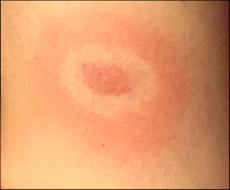
The rash called Erythema migrans (EM) or "bull's-eye" rash
· · Rash occurs in approximately 70-80% of infected persons1 and begins at the site of a tick bite after a delay of 3-30 days (average is about 7 days).
· · Rash gradually expands over a period of several days, and can reach up to 12 inches (30 cm) across. Parts of the rash may clear as it enlarge, resulting in a “bull's-eye” appearance.
· · Rash usually feels warm to the touch but is rarely itchy or painful.
· EM lesions may appear on any area of the body
I've been bitten by a tick. Do I have Lyme disease?
If you have not done so already, remove the tick with fine-tipped tweezers.
The chances that you might get Lyme disease from a single tick bite depend on the type of tick, where you acquired it, and how long it was attached to you. Many types of ticks bite people in the U.S., but only blacklegged tick transmit the bacteria that cause Lyme disease. Furthermore, only blacklegged ticks in the highly endemic area of the northeastern and north central U.S. are commonly infected. Finally, blacklegged ticks need to be attached for at least 24 hours before they can transmit Lyme disease. This is why it's so important to remove them promptly and to check your body daily for ticks if you live in an endemic area.
If you develop illness within a few weeks of a tick bite, see your health care provider right away. Common symptoms of Lyme disease include a rash, fever, body aches, facial paralysis, and arthritis. Ticks can also transmit other diseases, so it's important to be alert for any illness that follows a tick bite.
Can Lyme disease be transmitted sexually?
Lyme disease is transmitted by certain species of ticks, whose bite often goes unnoticed. There is no evidence that Lyme disease can be spread from person-to-person sexually or through other contact such as touching, kissing or sharing food.
If more than one person in your household gets Lyme disease, it is probably because you live in a Lyme disease endemic area and each person was unknowingly bitten by an infected tick.
Can Lyme disease be transmitted during a blood donation?
Although no cases of Lyme disease have been linked to blood transfusion, scientists have found that the Lyme disease bacteria can live in blood from a person with an active infection that is stored for donation. Individuals being treated for Lyme disease with an antibiotic should not donate blood. Individuals who have completed antibiotic treatment for Lyme disease may be considered as potential blood donors.
Is it true that you can get Lyme disease anywhere in the U.S.?
No. Lyme disease is spread through the bite of a blacklegged tick (Ixodes scapularis or Ixodes pacificus) that is infected with Borrelia burgdorferi. In the United States, most infections occur in the following endemic areas:
· Northeast and mid-Atlantic, from northeastern Virginia to Maine
· North central states, mostly in Wisconsin and Minnesota
· West Coast, particularly northern California
Maps showing the distribution of human cases are based on where people live, which because of travel, is not necessarily where they became infected. Cases are sometimes diagnosed and reported from an area where Lyme disease is not expected, but they are almost always travel-related.
I am pregnant and just found out I have Lyme disease. What should I do?
If you are pregnant and suspect you have contracted Lyme disease, contact your physician immediately. Untreated Lyme disease during pregnancy may lead to infection of the placenta and possible stillbirth.
Thankfully, no serious effects on the fetus have been found in cases where the mother receives appropriate antibiotic treatment for her Lyme disease. In general, treatment for pregnant women with Lyme disease is similar to that of non-pregnant adults, although certain antibiotics, such as doxycycline, are not used because they can affect fetal development.
Additionally, there are no reports of Lyme disease transmission from breast milk.
From CDC
|